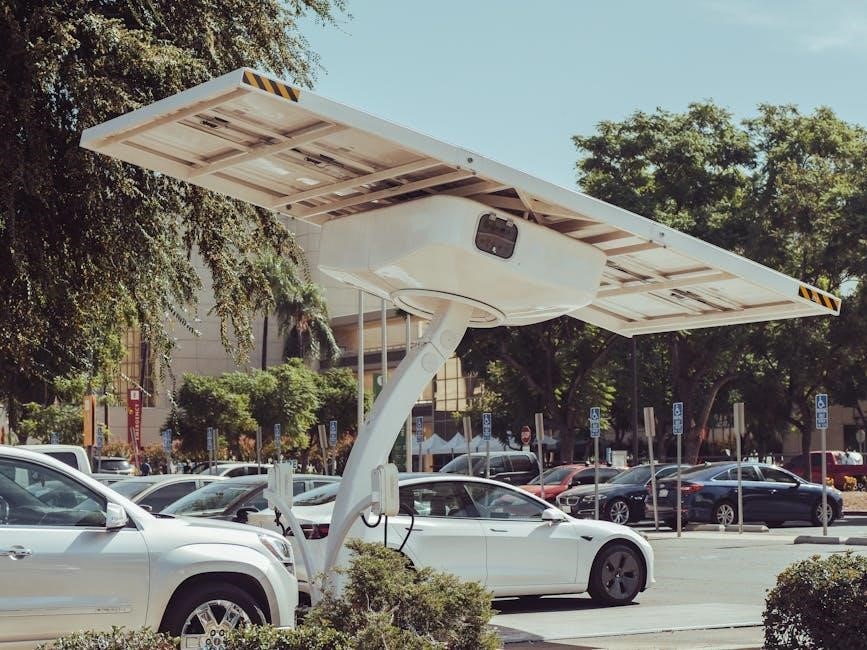
Solar charge controllers are vital for battery-based systems, managing power from panels. This manual guides you through setup, operation, and troubleshooting for optimal performance.
What is a Solar Charge Controller?
A solar charge controller is an essential component within a solar power system, particularly those utilizing batteries for energy storage. Its primary function is to regulate the voltage and current flowing from your solar panels to the batteries, preventing overcharging and extending battery lifespan. Think of it as a smart gatekeeper, ensuring a safe and efficient energy transfer.
Without a controller, direct connection could damage batteries. These intelligent devices maximize energy harvest and protect your investment. Modern controllers, like the MPPT series mentioned in various manuals, offer advanced features for optimized performance. Understanding its role is crucial for a successful solar setup, as detailed in user guides.
Why Use a Solar Charge Controller?

Employing a solar charge controller is paramount for system longevity and safety. Direct battery connection to solar panels leads to overcharging, drastically reducing battery life and potentially causing hazardous situations. Controllers, as outlined in user manuals, prevent this by regulating voltage and current.
Furthermore, they optimize energy harvest, especially with MPPT technology. They protect against reverse current flow, safeguarding both panels and batteries. Ignoring a controller risks damage and inefficiency. The CM series controllers, for example, are designed for intelligent charge and discharge, maximizing your solar investment. Proper installation, guided by the manual, is key to reaping these benefits.
Types of Solar Charge Controllers: PWM vs. MPPT
Solar charge controllers broadly fall into two categories: Pulse Width Modulation (PWM) and Maximum Power Point Tracking (MPPT). PWM controllers, simpler and more affordable, regulate by switching the connection between the solar panel and battery on and off. MPPT controllers, detailed in user manuals, are significantly more efficient.
MPPT maximizes energy harvest by constantly tracking the optimal voltage of the solar panel. This is particularly beneficial in colder weather or partial shading. While more expensive, MPPT controllers can yield up to 30% more power, especially with higher voltage panels. Choosing the right type, as your manual will advise, depends on your system’s size and budget.

Understanding Your Solar Charge Controller Model
Refer to your specific model’s manual for detailed information on components, specifications, and included accessories like USB cables or temperature sensors.
Identifying Key Components
Your solar charge controller features several crucial components. The LCD screen displays vital system data, including voltage, current, and battery status. LED indicators provide quick visual cues about operation and potential faults. Terminals are designated for solar panel, battery, and load connections – ensuring correct polarity is paramount. Some models include a USB port for PC connectivity, enabling data logging and configuration adjustments. A temperature sensor port allows for optimized charging based on ambient temperature. The controller’s housing provides protection, and proper ventilation is essential for efficient operation. Refer to the diagrams within your user manual for precise component locations and functions specific to your model. Understanding these elements is key to successful installation and maintenance.
Technical Specifications (Voltage, Current, Power)
Understanding your controller’s specifications is crucial. Maximum PV input voltage defines the highest voltage your solar panels can reach. Nominal system voltage indicates the battery bank’s voltage (12V, 24V, or 48V). Maximum charge current specifies the highest current delivered to the batteries. Total power handling capacity, in watts, dictates the system’s overall load capability. This manual details these parameters. Ensure your solar panel voltage and current remain within the controller’s limits. Exceeding these values can damage the device. Refer to the specifications table in your user manual for precise values and compatibility guidelines. Proper matching ensures optimal performance and longevity.
Included Accessories (USB Cable, Temperature Sensor)
Your solar charge controller package includes essential accessories for enhanced functionality. A USB cable facilitates communication with a PC for data logging and configuration adjustments, as detailed in this manual. A temperature sensor, often included, monitors battery temperature, optimizing charging parameters for extended battery life. Connecting this sensor, typically to the controller’s designated port, is vital for cold-weather charging. Refer to the user manual for specific sensor placement guidelines. Some models may include a communication cable for advanced monitoring. Verify all components are present before installation. Proper use of these accessories maximizes system efficiency.
Safety Precautions
Solar controllers handle high voltages; read this manual carefully before operation. Ensure proper grounding and observe correct polarity for all connections.
High Voltage Warnings
Critical safety information is present within this manual. As this controller manages voltages exceeding safe human limits, meticulous attention to all instructions is paramount. Never operate the device before thoroughly reading and understanding this guide. Incorrect handling can result in severe electrical shock or even fatal injury. Always disconnect the solar panel and battery before making any connections or adjustments.
Exercise extreme caution when working with the wiring. Ensure all connections are secure and insulated to prevent accidental contact. Do not attempt to disassemble or modify the controller in any way, as this will void the warranty and potentially create a hazardous situation. Regularly inspect all wiring for damage and replace any compromised components immediately. Prioritize safety above all else.
Grounding Instructions
Proper grounding is essential for safety and optimal performance. This charger must be connected to a permanently grounded wiring system to minimize the risk of electrical shock and protect against voltage surges. Ensure the grounding conductor is of the appropriate gauge and meets local electrical code requirements. Connect the grounding wire to a designated grounding terminal on the controller, and verify a secure connection.
A properly grounded system diverts fault currents safely to the earth, reducing the potential for damage to the equipment and injury to personnel. Consult a qualified electrician if you are unsure about grounding procedures or local regulations. Never operate the controller without a reliable grounding connection.
Polarity Considerations (Solar Panel, Battery, Load)
Maintaining correct polarity is crucial to prevent damage. Always double-check the positive (+) and negative (-) terminals on the solar panel, battery, and load before making any connections to the controller. Reverse polarity can instantly damage the controller and potentially the battery. Pay close attention to the markings and ensure a secure connection.
Incorrect wiring can void the warranty and create a safety hazard. If you are unsure about the polarity, consult a qualified technician. Confirm that all connections are tight and secure to prevent accidental reversals or interruptions in the circuit. Consistent polarity ensures efficient and safe operation.

Installation Guide
Proper installation ensures optimal performance and longevity. This section details mounting, connecting the solar panel, battery, and load, following safety instructions carefully.
Mounting the Controller
Proper mounting is crucial for optimal controller performance and longevity. Select a location that is cool, dry, and well-ventilated, avoiding direct sunlight and sources of heat. Ensure the mounting surface is solid and capable of supporting the controller’s weight.
Securely fasten the controller using appropriate screws or mounting brackets. Maintain adequate clearance around the unit for airflow and easy access to connections. Avoid mounting near flammable materials or in areas prone to moisture.
Consider the length of the wiring when determining the mounting location to minimize voltage drop and ensure efficient operation. A well-mounted controller contributes significantly to the overall reliability of your solar power system.
Connecting the Solar Panel
Before connecting, ensure the solar panel voltage is within the controller’s specified input range. Carefully observe polarity – positive to positive and negative to negative – to prevent damage. Use appropriately sized wiring for the distance and current to minimize voltage drop.
Connect the solar panel wires to the designated terminals on the controller, typically marked with a solar panel symbol. Ensure connections are tight and secure to prevent arcing or loose connections. Double-check polarity before fully tightening the terminals.
Proper connection ensures efficient energy transfer and protects both the controller and the solar panel from potential damage.
Connecting the Battery
Prior to battery connection, verify the battery voltage matches the controller’s settings. Incorrect voltage can cause immediate damage. Again, strict adherence to polarity is crucial – positive to positive and negative to negative. Utilize appropriately gauged wiring, considering both current and distance, to minimize voltage drop and ensure efficient charging.
Connect the battery wires to the designated terminals on the controller, usually marked with a battery symbol. Securely tighten all connections to prevent arcing or disconnections. Double-check polarity before final tightening.
A secure and correct battery connection is fundamental for safe and effective charging, protecting both the battery and the controller.
Connecting the Load
The load connection allows the controller to power DC devices directly from the battery. Ensure the load’s voltage requirements align with the battery voltage. As with the battery, observe strict polarity when connecting the load wires to the controller’s designated terminals – typically marked with a load symbol.
Use appropriately sized wiring for the load’s current draw to prevent overheating and voltage drop. Securely tighten all connections. Some controllers offer load control features, like timers or dusk-to-dawn sensors; configure these according to your needs.
Proper load connection ensures efficient and safe power delivery to your DC appliances.

Controller Display and Indicators
The LCD screen and LED indicators provide crucial system information, displaying voltage, current, and controller status for easy monitoring and diagnostics.
LCD Screen Information
The LCD screen is your primary interface for understanding the solar charge controller’s operation. It typically displays real-time data such as battery voltage, indicating the state of charge and overall health. Solar panel current and voltage are also shown, revealing the power input from your panels.
Furthermore, the display often indicates the load current, showing how much power is being drawn by connected devices. Charging status icons clearly communicate whether the battery is currently being charged, is fully charged, or is in a float mode; Many controllers also feature a temperature display, utilizing data from an optional temperature sensor to optimize charging parameters. Error codes, when present, are displayed to aid in troubleshooting, directing you to specific issues within the system. Understanding these displayed values is key to efficient system management.
LED Indicator Meanings
LED indicators provide quick visual cues about the controller’s status. A solid green “Charging” LED typically signifies normal battery charging is occurring, drawing power from the solar panels. A flashing red “Fault” LED indicates a system error, requiring investigation based on accompanying error codes displayed on the LCD screen.
A yellow “Load” LED illuminates when the load is actively receiving power, confirming the controller is supplying energy to connected devices. A blinking yellow LED might signal a load overload or protection activation. The “Battery Full” LED, usually solid green, confirms the battery has reached its optimal charge level. Understanding these LED patterns allows for rapid assessment of system health and potential issues, even without detailed LCD analysis.

Operating Instructions
Begin with initial setup, configuring parameters for your battery type. Regularly monitor system performance via the display, adjusting charging settings as needed for efficiency.
Initial Setup and Configuration
Upon receiving your solar charge controller, carefully review all included documentation before proceeding. Begin by connecting the battery, ensuring correct polarity – positive to positive, and negative to negative. Incorrect polarity can cause irreversible damage! Next, connect the solar panel, again verifying correct polarity.
The controller will likely require configuration to match your battery type (e.g., lead-acid, lithium-ion). Access the settings menu, typically through a combination of button presses, as detailed in the manual. Select the appropriate battery type and charging profile. Some controllers also allow adjustment of charging voltages and current limits. Finally, confirm all settings before enabling the system. Proper initial configuration is crucial for optimal battery health and system longevity.
Monitoring System Performance
Regularly monitoring your solar charge controller’s performance is essential for ensuring efficient energy harvesting and battery health. The LCD screen displays vital information, including battery voltage, charging current, and load current. Pay close attention to these readings to identify any anomalies.
Many controllers also log historical data, allowing you to track performance trends over time; Utilize this feature to assess system efficiency and identify potential issues. Refer to your manual for specific instructions on accessing and interpreting this data. Consistent monitoring allows for proactive maintenance and maximizes the lifespan of your solar power system.
Adjusting Charging Parameters
Your solar charge controller allows customization of charging parameters to optimize battery performance and lifespan. These settings typically include battery type selection (AGM, Gel, Flooded), float voltage, equalization voltage, and temperature compensation. Consult your manual for recommended settings based on your specific battery chemistry.
Incorrect settings can lead to undercharging or overcharging, reducing battery life. Temperature compensation adjusts charging voltage based on ambient temperature, crucial for maintaining optimal battery health. Carefully review and adjust these parameters according to the manual’s guidance for a tailored and efficient charging process.
Troubleshooting Common Issues
This section of the manual addresses frequent problems like no charging, incomplete charging, and error codes, offering solutions for a functional system.
No Charging Indication
If the solar charge controller displays no charging indication, several factors could be at play. First, verify the connection between the solar panel and the controller, ensuring correct polarity and secure wiring. Check the solar panel’s output voltage under sunlight; it must exceed the controller’s minimum input voltage.
Inspect the battery connection, confirming proper polarity and a solid connection. A fully discharged battery might not accept a charge immediately, so allow some initial charging time. Review the controller’s settings; ensure the correct battery type is selected and charging parameters are appropriate. Finally, consult the manual for specific error codes displayed, as they pinpoint the issue.
Battery Not Charging Fully
If your battery isn’t reaching a full charge, investigate potential causes systematically. Confirm the solar panel array is adequately sized for the battery bank; insufficient panel wattage limits charging capacity. Check for shading on the panels, as even partial shading significantly reduces output. Examine battery health – old or damaged batteries may have reduced capacity and struggle to fully charge.
Verify the charge controller settings are correctly configured for your battery type; incorrect settings hinder optimal charging. Inspect all wiring connections for corrosion or looseness, increasing resistance and reducing charging efficiency. Refer to your manual for recommended charging profiles and troubleshooting steps.
Error Codes and Their Meanings
Your solar charge controller utilizes error codes to diagnose system issues. Consult the manual for a comprehensive list, as codes vary by model. Common errors include “Over Voltage” indicating excessive panel voltage, potentially damaging the battery. “Low Voltage” signals insufficient panel input, often due to shading or poor connections.
“Battery Overcharge” suggests a faulty charging profile or controller malfunction. “Reverse Polarity” warns of incorrect wiring, posing a safety hazard. Addressing these errors promptly prevents damage and ensures optimal system performance. Always disconnect the system before attempting repairs, and refer to qualified assistance if unsure.
Maintenance and Care
Regularly inspect connections for corrosion and ensure the controller remains clean. Calibrate the temperature sensor periodically, as detailed in this manual.
Cleaning the Controller
Maintaining a clean solar charge controller is crucial for optimal performance and longevity. Dust, dirt, and debris can accumulate on the controller’s surface, potentially leading to overheating and reduced efficiency. To clean the controller, always disconnect it from all power sources – the solar panel, battery, and load – to ensure safety.
Use a soft, dry cloth to gently wipe down the exterior of the controller. Avoid using water, cleaning solutions, or abrasive materials, as these can damage the sensitive electronic components. For stubborn dirt, a slightly damp cloth (ensure it’s nearly dry) can be used, followed immediately by a dry cloth. Pay particular attention to ventilation openings, ensuring they are free from obstructions to allow for proper airflow. Regular cleaning, as part of your routine maintenance, will help keep your controller functioning reliably for years to come.
Checking Connections
Regularly inspecting the connections to your solar charge controller is paramount for safe and efficient operation. First, ensure all wiring is securely fastened to the terminals – loose connections can cause voltage drops, overheating, and even fire hazards. Visually inspect the wires for any signs of damage, such as fraying, cracking, or corrosion.
Confirm correct polarity: positive to positive and negative to negative, for both the solar panel and battery connections. A miswired connection can instantly damage the controller. Gently tug on each wire to verify its grip. If any connections are loose or corroded, tighten or replace them immediately. Prioritize safety by disconnecting power before any inspection or repair work.
Temperature Sensor Calibration
Accurate temperature readings are crucial for optimal battery charging, especially with lead-acid batteries. The solar charge controller utilizes a temperature sensor to adjust charging voltages, preventing overcharging in hot weather and undercharging in cold conditions. To calibrate, compare the controller’s temperature reading with a reliable thermometer placed near the battery.
If discrepancies exist, consult your controller’s manual for calibration procedures – some models offer adjustable offsets. Proper calibration ensures the battery receives the correct charge voltage, maximizing its lifespan and performance. Regularly check the sensor’s placement, ensuring it maintains contact with the battery terminal.